

Meta Muse and AI hardware: agents in everyday life
In September 2026, Meta moved its Muse personal agent from phones and desktops onto wearable hardware. At Meta Connect 2026, the company showed Muse on AI glasses, previewed the pocket Muse Charm device, and expanded Ray-Ban Meta, Oakley, and Meta Glasses into a 100-plus style lineup. For hardware teams, the story is not another chatbot. It is how large language models leave the browser and sit on your face, in your pocket, and in the room where you live.
This note is for procurement, product, and engineering leads who build connected devices. We summarize what Meta shipped, what agents mean for everyday users, and how Alexandr Wang fits into Meta’s AI direction. Product facts come from Meta’s Muse launch, Connect posts, and Meta leadership pages. Techwall did not test Muse hardware in our lab.
What Muse is on the hardware side
Muse is Meta’s personal AI agent. It runs tasks across apps, keeps context, and can work in the background while you do something else. On software, it lives in the Muse app, WhatsApp, the web, and Muse for Mac. Meta built it on Muse Secure VM, a dedicated virtual machine with a separate Sentinel safety layer.
Connect 2026 added three hardware angles:
- AI glasses. Muse will reach Meta’s smart glasses in the coming months. You wake it with your agent’s name. It can act on what you are looking at, so you do not have to describe a product label or a flyer on the wall.
- Muse Charm. Meta calls this its first AI agent device. It is a small wearable you talk to by voice, touch, and camera. Meta said more details would follow later in 2026.
- Meta VR Glasses. A separate product line: about 100 grams on the face, a belt puck for compute and battery, spring 2027 at $1,299.99 USD. Meta AI can rearrange virtual workspaces and launch media apps. That is spatial computing, not the same as Muse Charm, but it shares the same bet on ambient AI.


LLMs in everyday use: from answers to actions
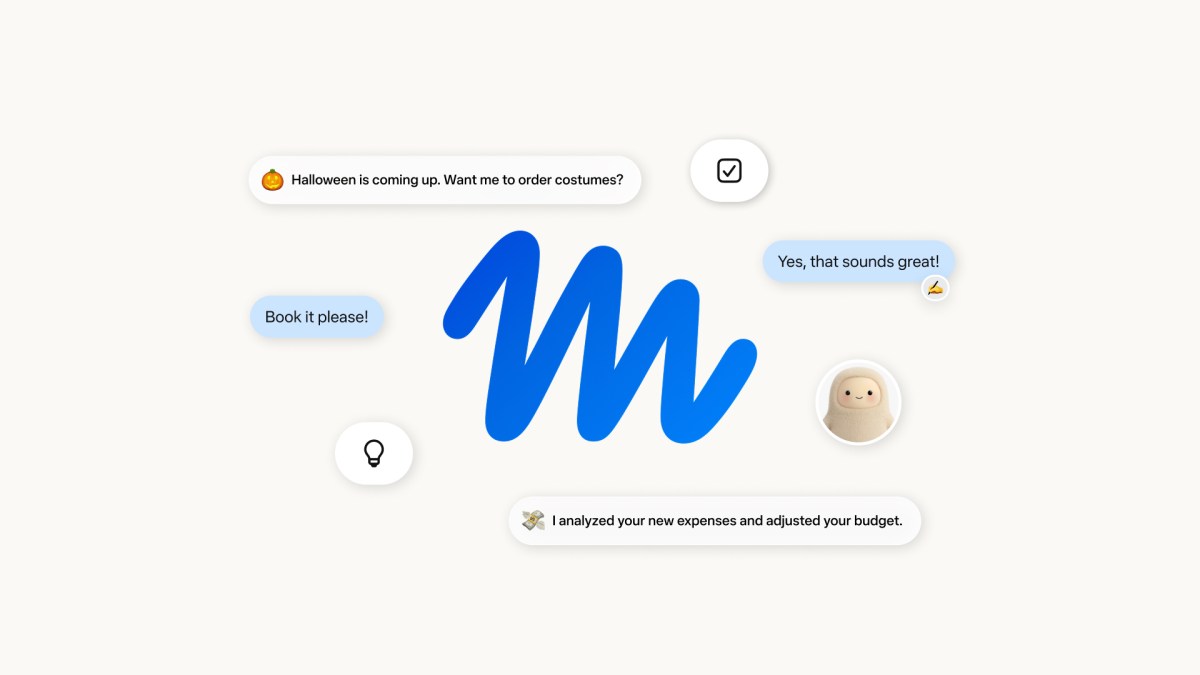
For two years, most people met LLMs as a text box. You asked a question. You got a paragraph. Muse is closer to a delegate. Meta positions it to send email, book travel, fill forms in a browser, and return when it needs approval before a purchase or an outbound message. Connect added voice that can run work while you keep talking, an email address for the agent, and connectors to retailers and work tools.
On glasses, the shift is sensory. Microphones and cameras give the agent the same cues you already use: what is on the shelf, what is on the calendar, what is in front of you on a run. Meta also highlighted FDA-cleared hearing enhancement on supported glasses, hands-free workouts, and shopping flows that read price tags and reviews. That is LLM plus sensors plus a wearable form factor, which is the same stack industrial teams call edge AI.
The rise of agents and where they show up
Agents are models plus tools plus memory plus policy. They call APIs, open browsers, and schedule follow-ups. The factory floor version looks like PLC hooks and vision models. The consumer version looks like Muse booking a flight while you cook dinner.
Common applications Meta highlighted or demoed in 2026:
- Life admin: school emails, calendars, grocery lists, appointment booking.
- Commerce: voice checkout with Link and Shop Pay, price alerts on products you see in the wild.
- Work: Mac computer use, Notion, GitHub, Box connectors for Muse.
Presence: capture with Dolby Atmos, navigation by landmarks, less time staring at a phone.
For OEM and ODM programs, the parallel is clear. Your device is no longer “smart” because it has Wi-Fi. It is smart because it exposes bounded tools to an agent: set a mode, read a sensor, trigger a safe action, log every step.
What this means for normal people
Most households will not buy a $1,299 VR glasses puck on day one. Many will try Muse free on a phone, or buy Ray-Ban Meta Audio when they already wanted lightweight open-ear listening. The practical change is friction removal: fewer tabs, fewer forms, fewer “I will do that later” tasks.
Tradeoffs are real. Agents need permissions. They need clear audit trails. Meta’s Muse materials stress human approval before irreversible steps, opt-out of training, and upcoming Muse Confidential VM where Meta says it cannot read the VM contents. Normal users should expect a learning period: which tasks to delegate, which to keep manual, and how much camera and mic access feels acceptable in public.
Over the next few years, proliferation likely follows the phone pattern: a few flagship devices, then cheaper variants, then agents baked into gear people already wear. Hearing aid features on glasses are an example of AI plus regulated wellness crossing into daily life without a separate medical device purchase for everyone.
Alexandr Wang and where Meta AI is headed

Alexandr Wang (often written Alexander Wang in press) became Meta’s Chief AI Officer in 2025. He leads Meta Superintelligence Labs. Before Meta, he co-founded Scale AI at 19 after leaving MIT. Scale built the data labeling, evaluation, and infrastructure layer that trains and tests large models, including defense and enterprise programs.
Meta’s deal structure brought Wang in to accelerate frontier models and agent quality. Public messaging from Wang and Meta centers on three themes:
- Personal superintelligence for everyone, not only for researchers. Muse is the consumer face of that goal.
- US competitiveness in AI, including data and eval rigor Wang argued for at Scale.
- Embodiment, from Muse Realtime Avatar research to glasses and Charm hardware that keep the agent within arm’s reach.
Muse Spark and Muse Realtime Voice come out of the same lab stack Wang oversees. Connect’s glasses roadmap is how Meta distributes that stack without asking users to live inside a social feed.
What hardware builders should watch
Meta is proving demand for agent-native devices: microphones tuned for voice agents, cameras for visual Q&A, batteries that last a workday, and privacy modes like Private Processing on glasses. Third-party brands will face pressure to expose MCP-style tools, OAuth scopes, and webhook events so agents can act safely on real hardware.
If you ship IoT, industrial, or consumer electronics, the design question is no longer “Do we add Alexa?” It is “Which agent platforms do we certify, and what is our harness when the model updates weekly?”
- Define tool boundaries before you expose actuators or payments.
- Log agent actions the way you log firmware OTA events.
- Plan DFM for sensors and radios agents rely on, not only for the baseline app.
- Pair cloud agents with devices you can manufacture at volume. That is the Physical AI lane.
Techwall’s role is unchanged: Hong Kong commercial ownership, China production under ISO 9001 and BSCI, and engineers who reply within one business day on OEM and ODM programs. Muse will not run your SMT line. It is a signal that your customers will expect agent-ready hardware in the next product generation.
Sources: Meta Connect 2026 recap; Meta Newsroom Muse introduction; Meta Muse Charm product page; Meta leadership biography for Alexandr Wang; Wikimedia Commons portrait. We are not affiliated with Meta.
